
Mead as Medicine: The Long History of Mead & Healing
For most of human history, mead wasn’t only a celebratory drink. It was medicine. From ancient Greece to medieval monasteries, honey wine (mead) sat on the same shelves as herbs, tinctures, and ointments. Early physicians saw it not just as nourishment but as a restorative tonic, a carrier for herbs, and a trusted remedy for winter ailments.
Today, mead is returning as a craft beverage, but its medicinal story is still one of its most fascinating threads. This is a look at how mead has been used across the centuries to heal, strengthen, and soothe.
Ancient Medicine: Where Mead Began
The world’s earliest medical writers treated honey as a foundational ingredient in health, and mead as one of its most versatile forms.
Hippocrates and Hydromeli
Hippocrates, often called the father of medicine, described hydromeli (honey mixed with water, often fermented) as a cooling, calming drink. He recommended it for:
fevers
digestive weakness
easing childbirth
recovering strength after illness
To him, honey wine was both gentle and effective. It soothed the body but also provided quick energy from the sugars that remained.
Dioscorides and Galen
The physician Dioscorides (1st century CE) recorded honey-based wines as remedies for sore throats, chest tightness, and digestive troubles. Galen later wrote that mead had “warming” qualities and could loosen phlegm, settle the stomach, and support lung health.
All of this came from the ancient belief that honey itself was inherently restorative, and fermenting it made those benefits more available.
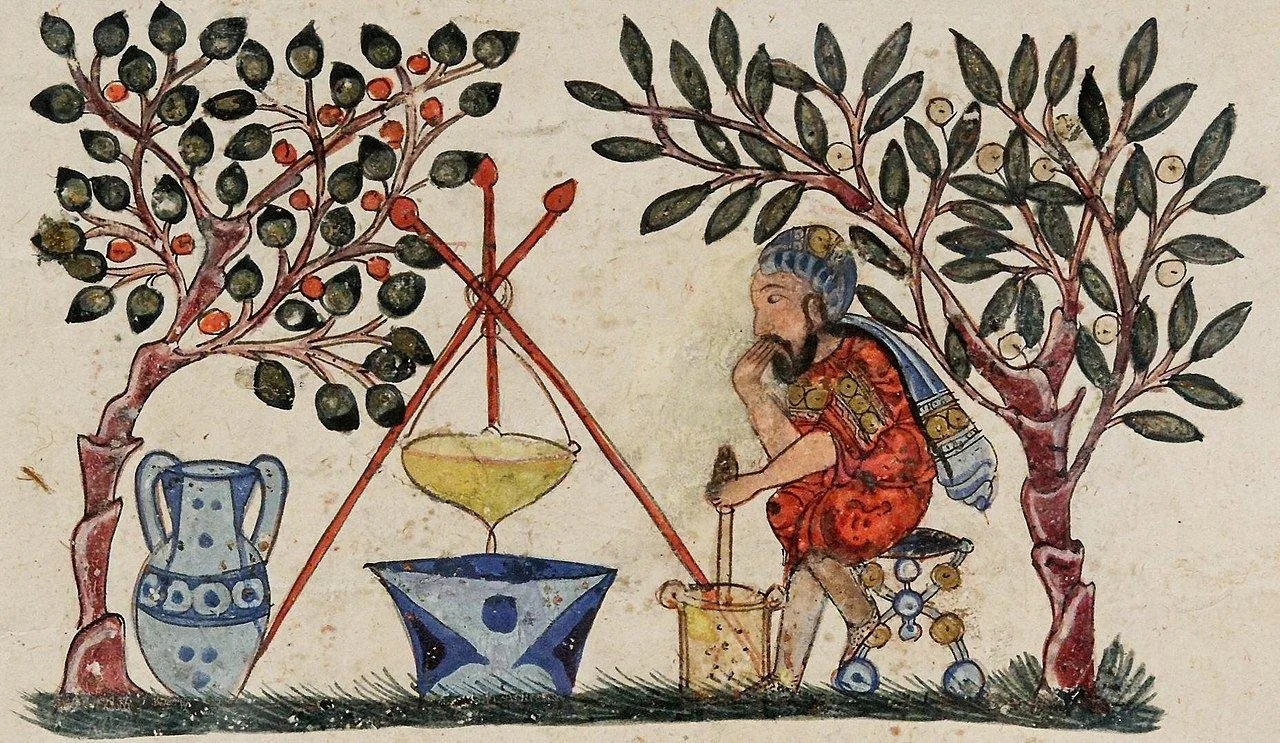
Physician preparing an elixir folio - From a manuscript of the De Materia- Medica by Dioscorides ca. 40–90AD.
Mead in Middle Ages Medicine
By the Middle Ages, mead had become a standard part of monastic medicine. Monks kept bees, grew herbs, and brewed medicinal drinks that blended the two.
Monastic Infirmaries
In monastic hospitals throughout Europe, mead was used:
as a winter tonic
for digestive issues
to help the weak recover their strength
for colds, coughs, and melancholy
These weren’t recreational drinks. They were carefully prepared remedies, often infused with herbs like thyme, rosemary, sage, or chamomile.
The Humoral System
Medieval medicine followed the four humours theory, where healing involved balancing hot, cold, wet, and dry. Mead, seen as warming and moistening, was the right choice for winter chills, respiratory complaints, and low mood.
This is one reason why mead has such a long association with winter and the festive season. It was literally prescribed as a winter-strengthener.
Anglo-Saxon & Norse Remedies: Mead as a Healing Base
Long before the English language existed in its current form, early healers were using mead in their medical books.
The Leechbook of Bald (c. 950)
This famous Anglo-Saxon medical manuscript includes dozens of recipes using honey wine. Mead was mixed with herbs to treat:
chest congestion
wounds
digestive pain
general weakness
It was also used as an antiseptic rinse for wounds. Honey’s natural antimicrobial qualities made it one of the best disinfectants available.
Norse Healing Traditions
In Norse and Viking culture, mead carried a similar medicinal role. Fermented honey drinks were used to cleanse wounds, warm the body in winter, and deliver herbs into the system more effectively.
Across cultures, mead wasn’t merely enjoyed — it was relied on.
Herbalists and Early Modern Medicine (1500–1700s)
Traditional herbalists continued this medicinal use well into the Renaissance period.
Culpeper and the Complete Herbal
Nicholas Culpeper, one of the best-known herbalists of the 1600s, listed honey wines and honey-vinegar drinks as remedies for:
coughs
lung congestion
sore throats
circulation
fatigue
He also described mead as a base for making herbal tinctures and syrups, thanks to its ability to extract and preserve medicinal compounds.
Oxymel: Mead’s Close Cousin
Oxymel (a honey-and-vinegar mixture, sometimes derived from mead) appears in dozens of medical texts. It was believed to cut phlegm, settle coughs, and soothe the throat. Versions of it are still used today in herbal medicine.
The Apothecary Era: 18th–19th Century Medicine
By the 1700s and 1800s, mead had moved from monasteries into pharmacies.
Old British and European pharmacopoeias — the official books of medicine — describe mead and honey wine as:
a tonic
a digestive stimulant
a vehicle for medicinal herbs
a soothing agent for the throat
a drink for convalescence
Doctors prescribed mead for patients recovering from long illnesses, and it was sometimes recommended for people struggling with sleep or appetite.
Alcohol as Medicine
Until the early 20th century, alcohol itself was widely considered medicinal. Brandy, port, and mead were all commonly advised by doctors for rest, warmth, or stimulation.
Mead benefited from this era because honey had already earned its place in the medical toolkit.
Why Mead Made Sense as Medicine
Looking across thousands of years, the reasons mead was used medically are surprisingly consistent:
1. Honey is antimicrobial and soothing
Even today, research confirms honey’s antibacterial and anti-inflammatory properties.
2. Fermentation made nutrients more accessible
Ancient physicians believed fermentation unlocked honey’s “digestive power.”
3. Mead carried herbs effectively
Alcohol extracts plant compounds far better than water alone.
4. It provided quick energy during illness
Before modern food systems, this was crucial.
5. Mead was safe compared with untreated water
In many places, water wasn’t reliably drinkable until modern sanitation arrived.
Appendix: Mead Medicinal Recipes from History
1. Hippocrates (5th century BCE)
Hydromel for Fever & Thirst
Source: Hippocratic Corpus, On Regimen in Acute Diseases
Modern-English rendering:
“For those with fever and great thirst: mix honey with water and allow it to ferment lightly. Give this hydromel in small drinks; it cools the fever and quenches thirst more gently than water.”
Notes:
This is one of the earliest medical references to fermented honey-water being used specifically as a fever treatment.
2. Remedy for Chest Congestion (Mead + Herbs)
Source: Leechbook III, recipe for “a lung remedy”
Original sense: The healer is instructed to mix herbs into warm honey-wine for a patient struggling with a tight chest or difficulty breathing.
Modern-English rendering:
“For a tightness of the chest: take fennel, wermod [wormwood], and hassuc [horehound]. Boil these herbs in good honey-wine. Let the patient drink it warm, morning and night, until he breathes more easily.”
Why this matters:
This is a classic example of mead used as a medicinal carrier. Honey-wine extracts plant compounds far better than water alone, and horehound is still used in modern herbal cough remedies.
3. Mead-Based Tonic for Weakness After Illness
Source: General tonics in Leechbook II
Modern-English rendering:
“If a man has been long unwell and is weakened: take carline thistle and boil it in honey-wine. Give it to him to drink. It restores strength.”
Notes:
Carline thistle appears in multiple medieval remedies for fatigue. Using mead as the base made this a caloric, nutrient-rich tonic — essentially an early “recovery drink”.
4. The Trotula (Medieval Women’s Medicine Text, 12th century)
Mead Syrup for Menstrual Pain & Digestive Discomfort
Source: The Trotula, Salerno medical school
Modern-English rendering:
“Make a syrup of honey-wine and fennel seed. Give to women who suffer pain of the womb or heaviness after eating. Let the drink be warm and taken with rest.”
Notes:
The Trotula is one of the first comprehensive medical texts focused on women’s health.
5. Ancient China — Fermented Honey Drinks in Early Medicine
Texts from the Zhou Dynasty (c. 1200–800 BCE) and Han Dynasty note mi-jiu (蜜酒), a fermented honey wine.
Source: Han Medical Texts, inc. Shennong Bencao Jing:
“Mi-jiu strengthens qi, warms the middle, and calms pain of the stomach.”
Mixed with ginger, it was used to “dispel cold from the chest and warm the lungs.”
Some formulas combined honey-wine with:
dried ginger
cinnamon
angelica root
ginseng
These preparations were warming, restorative, and used for both winter ailments and fatigue.
Notes: